Cisco Catalyst 9300X vs. 9300: Which Should You Buy?
StackWise-1T and faster uplinks make the Catalyst 9300X attractive, but the standard 9300 remains a practical choice for many enterprise access deployments.
Latest
StackWise-1T and faster uplinks make the Catalyst 9300X attractive, but the standard 9300 remains a practical choice for many enterprise access deployments.
Cosmetic condition describes how refurbished hardware looks. Working condition describes whether it is ready for deployment. Buyers should understand the difference.
Cisco has set December 31, 2026 as the final order date for the Meraki Access Points.
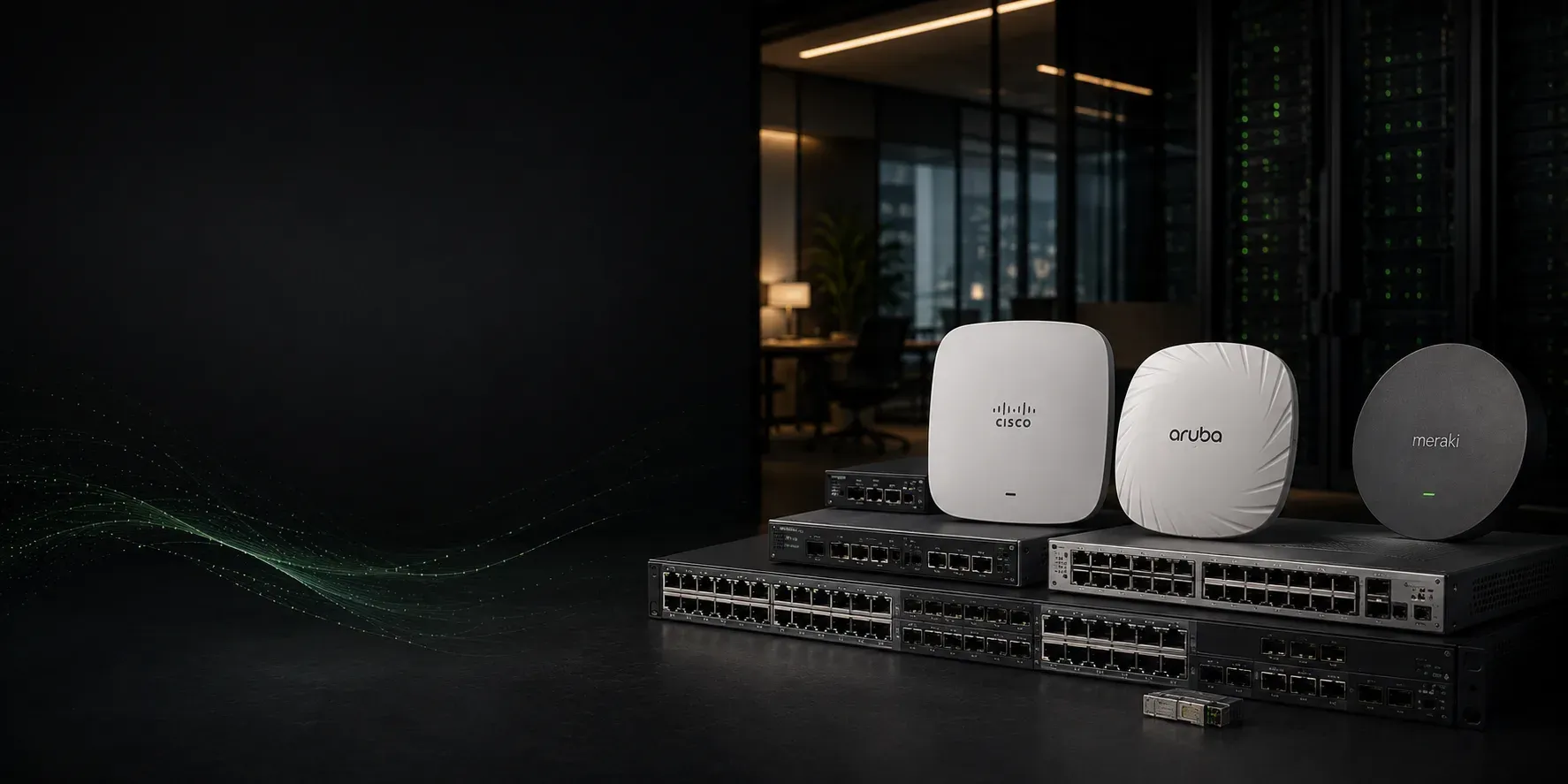
Enterprise networks don't refresh in one synchronized cycle — so previous-generation switches, access points and optics keep selling for replacements, compatible spares and cost-controlled expansion.
Cisco set April 30, 2026 as the last order date for the Meraki MS225 and MS210 access switches, with cloud support continuing through April 30, 2031.
Both run AOS-CX — the CX 6200 is the cost-controlled access choice, while the CX 6300 adds multigigabit density, up to 90W PoE, faster uplinks, bigger stacks and aggregation/core routing scale.
Cisco closed new sales of the Catalyst 2960-X and 2960-XR families on October 31, 2022, with last date of support on October 31, 2027 and Catalyst 9200 as the recommended migration.
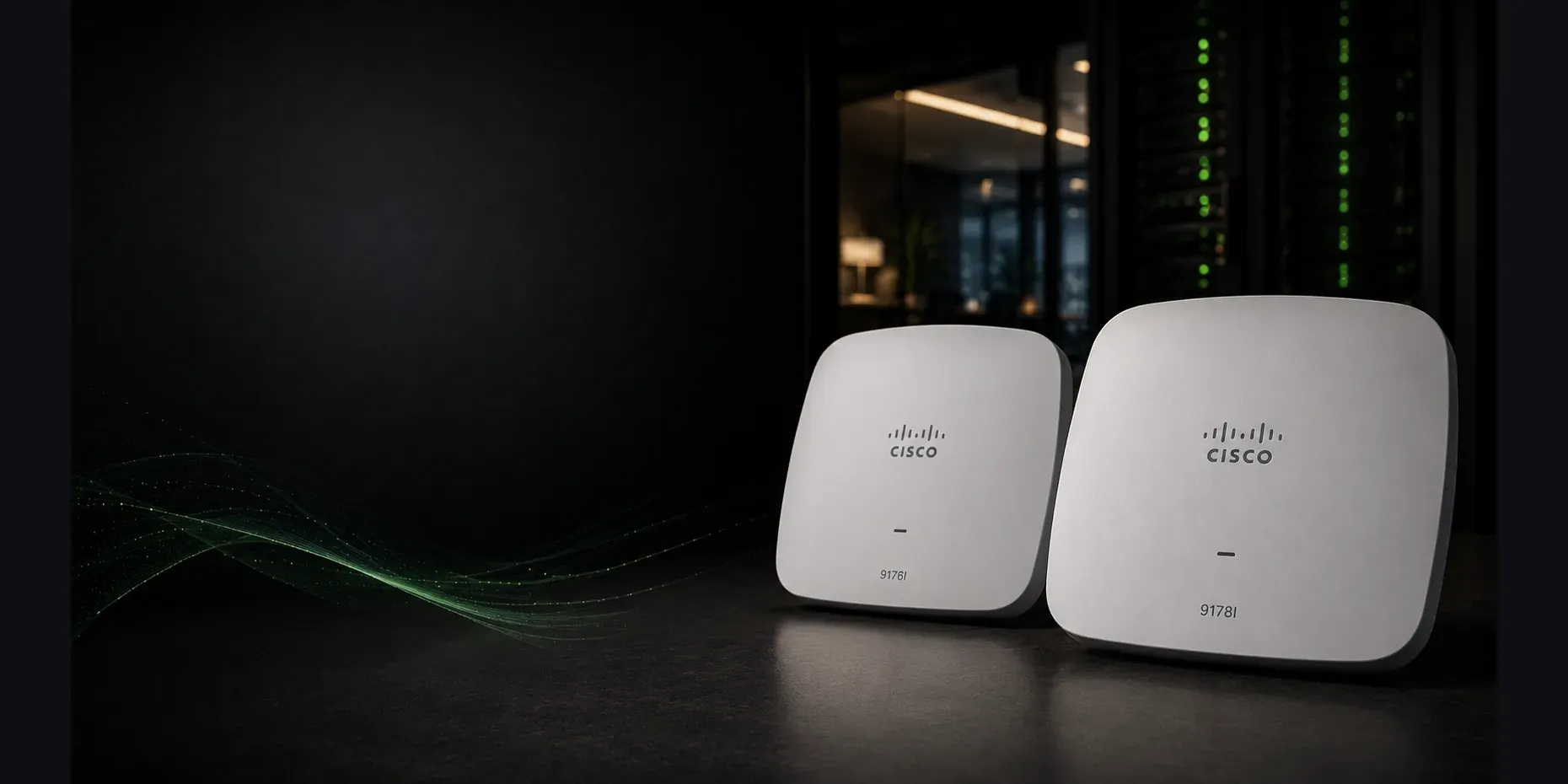
The 9176I offers three flexible client radios and one 10 GbE uplink, while the 9178I adds a fourth radio, up to 16 spatial streams and dual 10 GbE uplinks for density and resilience.
The Juniper EX4100 is a cloud-ready access-switch family, not a single configuration — the right buy depends on the exact model, PoE class, uplinks, airflow, Virtual Chassis and Mist management.
A Cisco SFP-10G-SR should be evaluated for more than appearance. Buyers should confirm the exact part number, intended fiber type, platform compatibility, physical condition, optical diagnostics and live link performance before treating a transceiver as deployment-ready.
The Catalyst 9200 and 9300 are both enterprise access switches — the 9200 is the cost-controlled branch and access choice, while the 9300 adds stacking bandwidth, multigigabit density, faster uplinks and room to grow.
Cisco's End-of-Sale date doesn't end MR36 demand — existing deployments still need replacements, expansion units and compatible spares, and the MR36 stays a practical fit while a Wi-Fi 7 migration is planned.
At Sekatron, a refurbished Cisco switch isn't considered tested until every port, PoE, boot, hardware and reset step has passed final quality control — not just power-on.
Meraki End-of-Sale stops new orders, not your installed hardware — for existing networks, the date that matters is End-of-Support.
For full Wi-Fi 7 performance and any 6 GHz operation, clients need WPA3 and Protected Management Frames — not just a new access point.
The MR36 and MR44 are Wi-Fi 6 access points built for different capacity needs.
Cisco lists the Wireless 9172I as the migration option for the Meraki MR36.
The lowest purchase price is not always the lowest‑cost decision.