
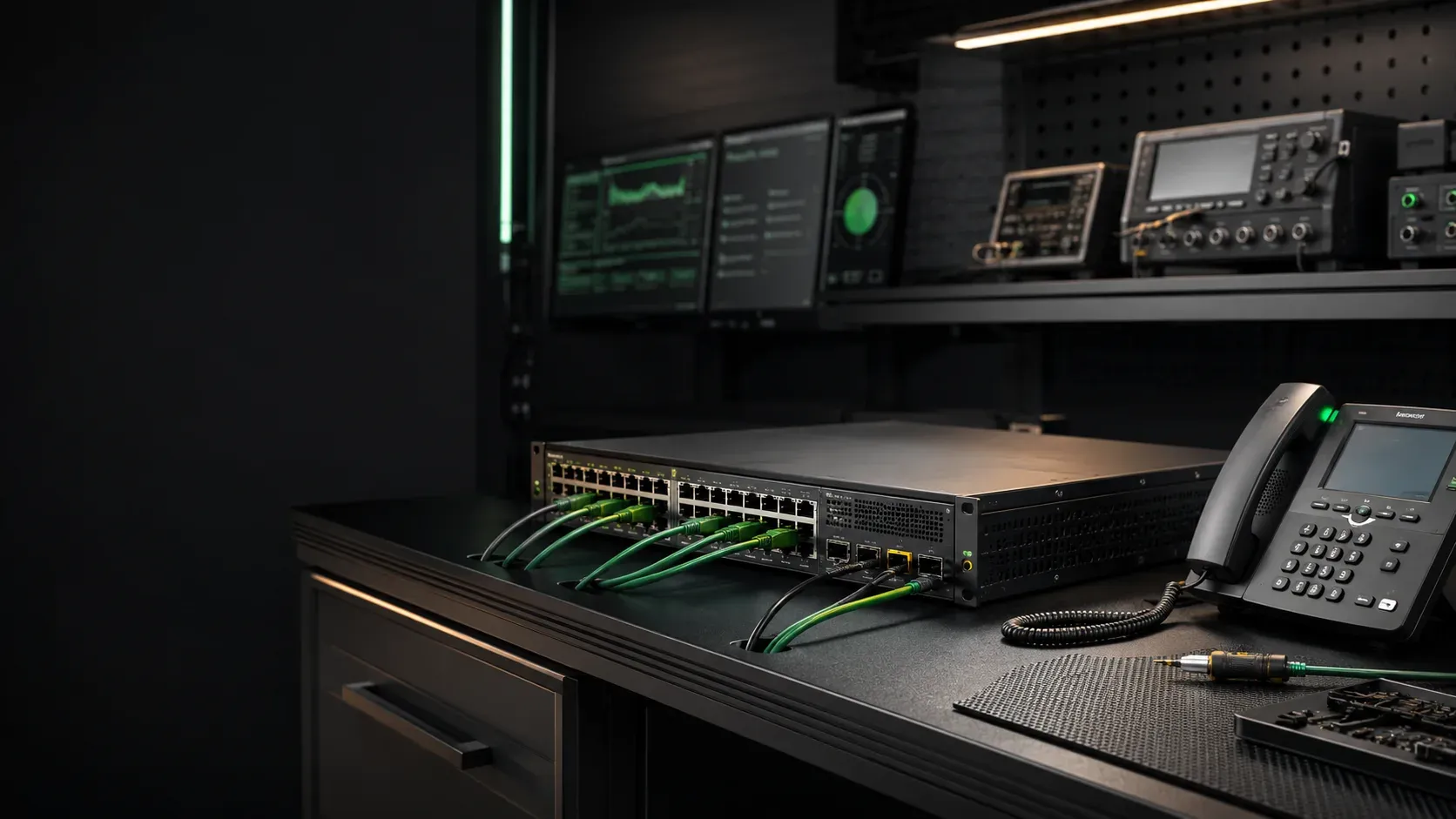
How We Test Refurbished Cisco Switches Before Resale
At Sekatron, a refurbished Cisco switch isn't considered tested until every port, PoE, boot, hardware and reset step has passed final quality control — not just power-on.
Sekatron Market Intel
What does “tested refurbished” actually mean?
A properly tested refurbished switch should be evaluated as both a physical device and a network component.
The process should answer several questions:
- Does the switch boot normally?
- Is the console output clean and readable?
- Do the fans and power supplies operate correctly?
- Does every physical Ethernet port pass data?
- Do PoE-capable ports deliver power?
- Are uplink ports functional?
- Has the previous configuration been removed?
- Is the physical condition accurately represented?
- Has the unit passed a final quality-control review?
At Sekatron, powering on is only the beginning of the process.
Receiving and physical inspection
Testing starts when the equipment is received and unpacked.
Each unit is first inspected for visible damage and missing parts. The inspection includes areas such as:
- Chassis condition
- Front faceplate
- Ethernet ports
- Uplink slots
- Power-supply bays
- Fans
- Rack ears and mounting points
- Buttons, displays and indicator lights
- Dents, scratches and other cosmetic damage
Faceplate damage receives particular attention because it is one of the first things a buyer notices after opening the package.
Cosmetic wear does not always affect operation, but it should be identified before the unit reaches final quality control.
Boot and console checks
The switch is powered on and observed through the boot process.
Technicians review the console output to confirm that the device initializes normally and does not show obvious boot, hardware or system errors.
This stage also helps verify that:
- The switch reaches an operational state
- Power supplies are recognized
- Fans initialize and continue operating
- The system does not produce abnormal console output
- The device is accessible for further testing and reset
A switch that powers on but fails to boot correctly is not considered ready for resale.
Every Ethernet port is tested individually
One of the most important parts of the Sekatron process is individual physical-port testing.
Each Ethernet port is checked separately to verify data connectivity. The technician does not assume that all ports work because one or two ports pass traffic.
This matters because a switch can boot normally while still having:
- A dead port
- An intermittent port
- A damaged connector
- A port that negotiates incorrectly
- A port that passes power but not data
- A port that passes data but not PoE
Testing each port individually provides a much stronger indication of the switch’s actual working condition.
How PoE ports are tested
On PoE-capable Cisco switches, PoE functionality is also checked on the physical ports.
Sekatron technicians use a PoE-powered phone as a real endpoint. The test confirms that the connected device receives power and that the switch behaves normally during the connection.
The technician verifies both:
- Power delivery to the endpoint
- Normal network and console behavior
A PoE switch should not be considered fully tested simply because the data path works. A port may pass traffic while failing to provide power correctly.
Testing with an actual powered endpoint helps identify that difference.
Fans and power supplies
Fans and power supplies are checked during startup and normal operation.
Technicians confirm that the switch powers on correctly, the installed power supplies are recognized and the fans operate without obvious failure conditions.
Console output is also reviewed for abnormal messages associated with hardware components.
The goal is not merely to confirm that electricity reaches the switch. The goal is to verify that the system initializes and operates normally as a complete unit.
Uplink and expansion interfaces
Where applicable, uplink and module interfaces are also reviewed as part of the device test.
Depending on the model, this may include:
- SFP ports
- SFP+ ports
- Network modules
- Stack interfaces
- Removable power supplies
- Modular fans
The exact test can vary by platform and installed configuration, but the presence of uplink ports or modules should not be ignored simply because the copper access ports work.
Buyers should also confirm that the advertised configuration matches the hardware being shipped.
Factory reset and configuration removal
Every tested switch is factory reset before resale.
This removes the previous customer’s configuration and prepares the unit for a new deployment.
Resetting the switch helps prevent problems involving:
- Old VLAN configurations
- Previous usernames and passwords
- Management IP addresses
- Access-control settings
- Port-security policies
- Stack configuration
- Residual deployment-specific settings
A clean reset also gives the receiving technician a more predictable starting point.
The buyer should still apply the correct software, licensing and configuration for the new environment.
Cosmetic restoration versus functional condition
Refurbishment can include cleaning and controlled cosmetic work where appropriate.
A switch may be fully functional while showing scratches, faceplate wear or other signs of previous use. Cosmetic restoration can improve presentation, but it should never replace technical testing.
Functional condition and cosmetic condition are separate questions:
- Functional condition describes whether the hardware operates correctly.
- Cosmetic condition describes how the unit looks.
A clean exterior does not prove that every port works. Likewise, a minor cosmetic mark does not necessarily affect network performance.
Both conditions should be reviewed independently.
Final quality control
After testing, reset and cleaning, the unit moves through final quality control.
This review helps confirm that:
- The correct model is being shipped
- The unit matches the stated configuration
- Physical condition is acceptable
- Testing has been completed
- Required accessories are included where specified
- The device is properly prepared for packaging
Final quality control provides another opportunity to catch problems before the order leaves the facility.
Packaging matters
Enterprise network hardware can be damaged after testing if it is not packed correctly.
Switches are heavy, rigid devices with vulnerable front panels, power supplies and rack-mounting areas. Packaging should protect the hardware from impact and movement during transit.
A unit that passes testing but arrives with a damaged faceplate or bent chassis still creates a poor deployment experience.
Testing and packaging should therefore be treated as parts of the same quality process.
What happens if a unit develops a problem?
Sekatron provides a one-year warranty beginning on the delivery date.
When a verified product issue occurs, replacement inventory is checked first. If a suitable replacement is available, a replacement unit is sent. If one is not available, the buyer receives a full refund.
For product-related defects, Sekatron covers the return-shipping process.
This is a Sekatron warranty, not a Cisco manufacturer warranty. Buyers should understand the distinction between reseller coverage and the original manufacturer’s support or lifecycle terms.
Final takeaway
A refurbished Cisco switch should not be considered tested simply because it turns on.
Individual data-port testing, real PoE verification, hardware checks, configuration removal and final quality control provide a much clearer picture of whether the device is ready for another deployment.
For buyers, the most useful question is not “Is this switch refurbished?” — it is “What exactly was tested before it was offered for resale?”
Why it matters
Refurbished Cisco switches are often purchased to reduce cost, replace failed equipment or expand an existing network without redesigning the environment.
Those advantages depend on receiving hardware that is ready for deployment.
A thorough process cannot eliminate every possible future failure, but it can significantly reduce the risk of receiving a switch with an obvious dead port, PoE issue, hardware fault or residual configuration.
The quality of refurbished hardware depends less on the word "refurbished" and more on the work performed before the unit is shipped.
Key details
- Sekatron's testing process
- Physical inspection · Boot and console review · Fan and power-supply checks · Individual data-port testing · PoE testing with a powered phone · Uplink and module review where applicable · Factory reset · Cleaning and cosmetic evaluation · Final quality control · Protective packaging
- Warranty process
- One-year Sekatron warranty · Replacement sent when available · Full refund when replacement is unavailable · Return shipping covered for verified product issues
What buyers should consider
Before buying a refurbished Cisco switch, ask the seller:
Was every physical Ethernet port tested individually?
Were PoE ports tested with a powered endpoint?
Were the console output and boot process checked?
Were fans and power supplies verified?
Was the device factory reset?
Were uplink and module interfaces tested?
Is the cosmetic condition accurately described?
What warranty is provided?
What happens if replacement inventory is unavailable?
Who covers return shipping for a defective unit?
A vague statement such as "powers on and tested" does not answer these questions.
Sources
- Sekatron refurbishment, testing, and warranty process (first-party)